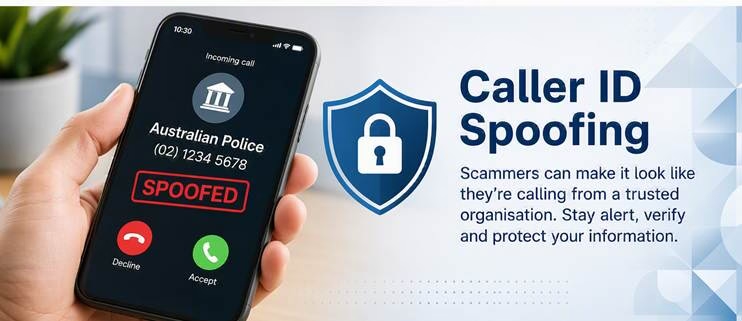
Australia’s national consumer watchdog is alerting communities to a rise in caller ID spoofing, where scammers disguise their real number to appear as a trusted organisation.
Community members across Australia are being warned to be cautious when receiving phone calls from organisations that appear familiar, after a significant rise in scam calls using a technique called caller ID spoofing.
Caller ID spoofing allows scammers to deliberately hide their real phone number and display a different, often Australian, number instead. This increases the likelihood that a call is answered. Typically, these callers are located overseas and impersonate a bank, a government agency or a telecommunications provider to obtain personal or financially sensitive information for fraudulent purposes. ACMA
There has been an increase in reports of scammers impersonating police officers by using official police phone numbers in an attempt to obtain personal details. Police across Australia have also seen a rise in authority scams targeting members of multicultural communities, particularly those from Chinese-speaking backgrounds, demanding money transfers to prevent alleged legal action. Queensland Police
The key rule is simple: the number displayed on your phone cannot be trusted as proof of who is actually calling. If you receive an unexpected call from a bank, the Australian Taxation Office, a government agency, or police asking for money or personal information, hang up and call the organisation back using the number listed on their official website.
Scamwatch advises that legitimate organisations will never request payment via cryptocurrency or gift cards, will never ask for one-time PIN or two-factor authentication codes over the phone, and will never create urgency or threaten legal action to pressure an immediate response.
Scams can be reported to Scamwatch at scamwatch.gov.au. If money has been lost, reports should also be made to ReportCyber. Scamwatch