Migrants bring skills, qualifications and experience to Australia, but turning those capabilities into local employment can be far from straightforward.
Recognition of existing skills, access to vocational training, understanding Australian employment systems and making the right connections with employers can all stand between what someone already knows and where they are able to work.
It raises a bigger question for regional communities such as Geelong: can vocational education help bridge the migrant skills-to-jobs gap?
This week, we explore that question, inside The Gordon.
For many people, finding a pathway into employment is not simply a matter of searching for a job.
Sometimes the first step is knowing where to go, who to speak to and what opportunities already exist in your own city.
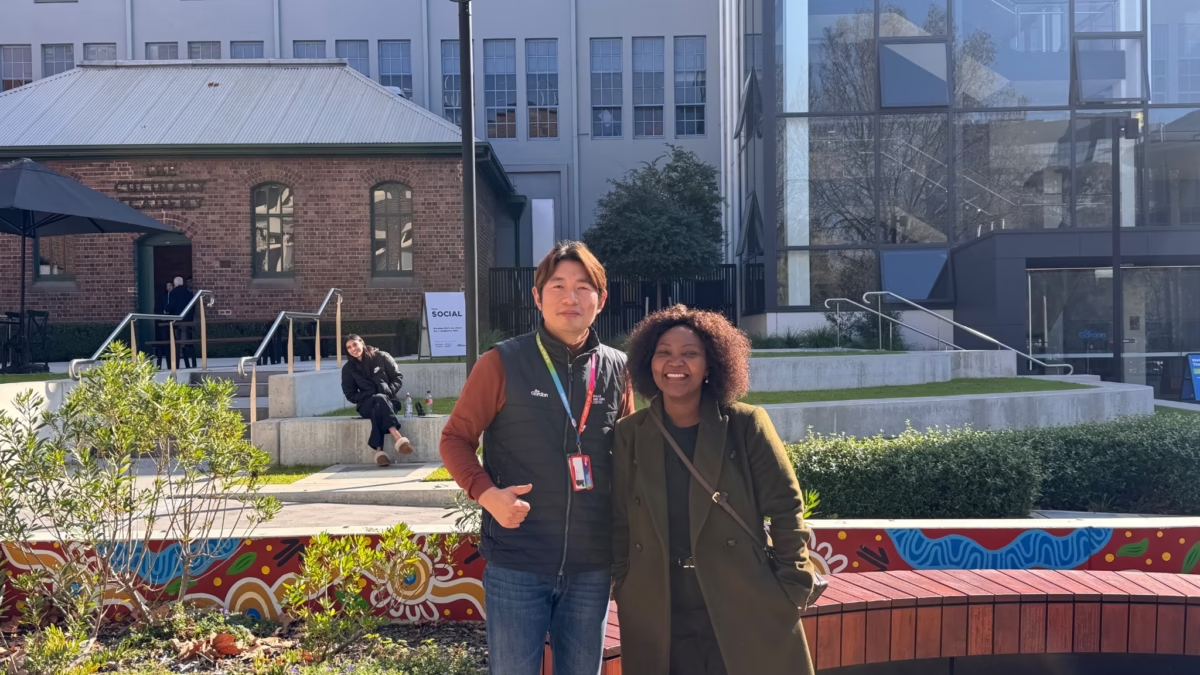
This week, Regional Runways Inc. met with Bryan Wu, a Reconnect Advisor at The Gordon’s Skills and Jobs Centre, to explore how stronger connections could help multicultural communities — particularly young people — access training, career advice and pathways into employment.
The conversation forms part of Regional Runways Inc’s ’ growing focus on employment, education and pathway partnerships, including through its GAP youth initiative
The Gordon is one of the institutions already positioned within Victoria’s vocational education and employment system to help people navigate some of these pathways. Its Skills and Jobs Centre provides free career and employment support, while the Reconnect program works with eligible people experiencing barriers to education, training or employment.
What began as a conversation about pathways became an opportunity to look more closely at what vocational education can offer — and at a question that extends well beyond any single institution.
Bryan offered a tour of The Gordon’s Geelong City Campus, taking us through training spaces spanning hospitality and cookery, hair and beauty, and some of the institution’s historic buildings.
For me, it was also my first proper look inside an institution I had passed countless times during eight years of living in Geelong.
And behind those familiar buildings was a much bigger story about skills, culture and opportunity.
Where culture meets vocational education
One stop was The Gordon’s Culinary Collective, home to its Culinary Academy, Barista School, event spaces and the historic Davidson Restaurant.
The Gordon has also established the Wirrpma First Peoples Culinary Program, bringing commercial cookery training together with Wadawurrung cultural knowledge, native ingredients, seasonal practices and connection to Country.
It is an interesting model of what can happen when vocational education recognises that culture and skills do not have to sit separately.
At the café, we spoke briefly with members of the team who were resetting after catering for a large group earlier that morning. It was another glimpse of what vocational training can look like when students learn in environments connected to real workplaces and real customers.
A campus carrying more than a century of history
Walking between the different buildings also revealed a side of The Gordon that can easily be missed from the street.
The institution dates back to 1887, beginning as a technical training institute at a time when Geelong’s industrial development was creating demand for new skills.
Many of the buildings across the city campus tell pieces of that story. The original hall, for example, is today the Davidson Restaurant.
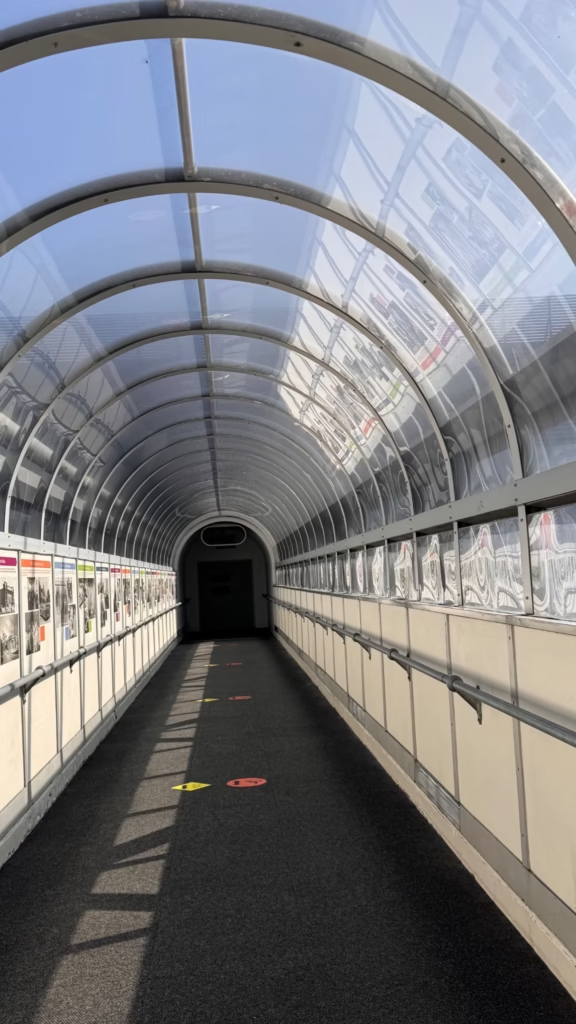
Walking through the enclosed bridge connecting parts of the campus felt almost symbolic: generations of training behind us, and a conversation about new pathways ahead.
And then there was hair
One of my favourite stops was The Studio, The Gordon’s working hair, barbering and beauty training salon.
It immediately made me think about African communities.
Across many African cultures, hair is more than appearance. Braiding in particular is a skill frequently learned informally — passed between generations, relatives and communities. For some, it also becomes an early form of enterprise.
That raises an interesting question.
How do we recognise the skills people already carry and connect them with formal qualifications, employment and enterprise opportunities?
That question extends far beyond hair.
Newly arrived and multicultural communities bring skills, knowledge and experience that may not always fit neatly into conventional Australian employment pathways. Some people need qualifications recognised. Others need local experience, further training, confidence navigating recruitment systems, or simply someone who can show them where the doors are.
That is why relationships between community organisations and institutions such as The Gordon matter.
For Regional Runways, the next step is not simply referring people to another service. It is about developing pathways that help young people and community members understand their options, make the right connections and move towards education, skills and sustainable employment.
Sometimes access begins with something remarkably simple:
Knowing what is behind the door — and having someone help you walk through it.